How each opener type works
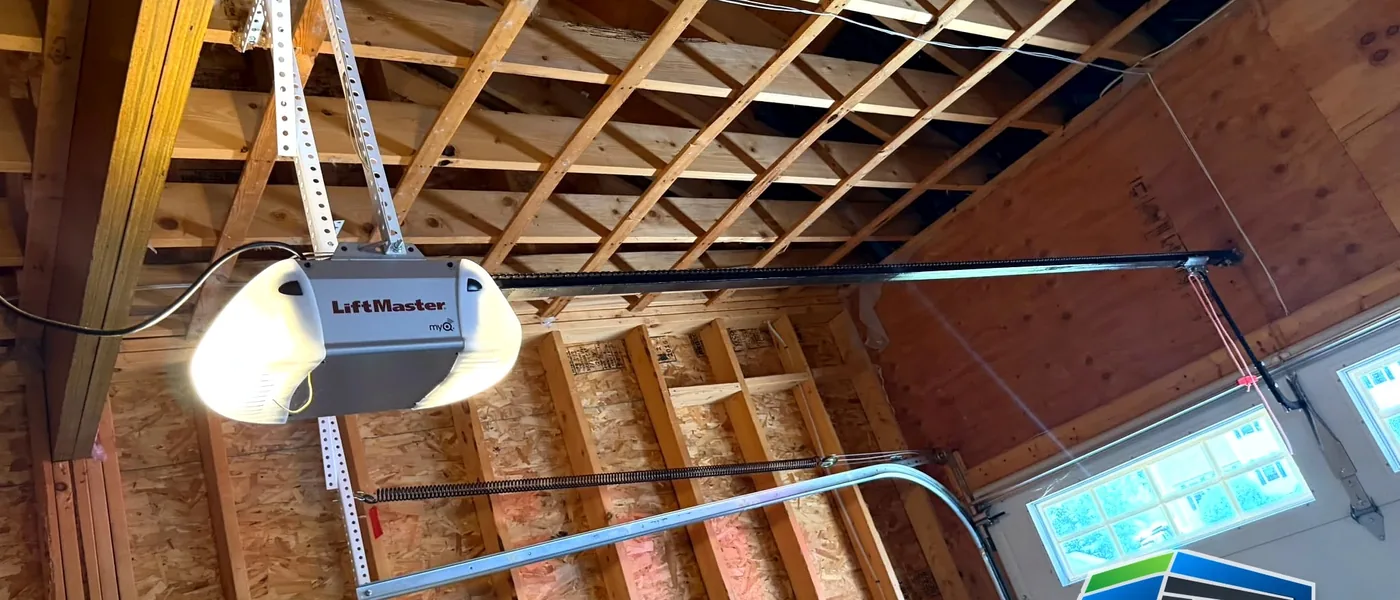
Chain and belt drives are both ceiling-mounted. A motor hangs from the garage ceiling and pulls a trolley along a rail. The trolley is attached to the top of the door with an arm.
The only real difference between the two is what moves the trolley. One uses a metal chain, much like a bicycle chain. The other uses a reinforced rubber or fiber belt.
A wall-mount opener, also called a jackshaft or side-mount opener, works differently. It sits on the wall beside the door and turns the torsion bar directly. There is no rail across the ceiling at all.
All three types can lift a typical residential door reliably when they are sized and installed correctly. So the choice is less about which one is best overall and more about which one fits your garage, your budget and how much noise you can live with. The sections below cover the strengths and tradeoffs of each one. Most homeowners can rule out at least one option within a few minutes of thinking about where their garage sits.
Chain drive openers
Chain drives have been around the longest. They are usually the least expensive option and are known for being strong and durable.
The tradeoff is noise. Metal on metal makes a rattle and clank you can hear through walls. That is less of a concern in a detached garage or one with no living space nearby.
- Typically the lowest cost
- Strong and suited to heavy doors
- Loudest of the three
- Needs occasional chain lubrication and tension checks
There are also screw drive openers, which use a long threaded rod to move the trolley. They have fewer moving parts but can be sensitive to big temperature swings. For most homes, the choice still comes down to the three types covered here. Each one is a proven design, so the right pick is mostly about fit, not quality.
Belt drive openers
Belt drives move the same trolley with a belt instead of a chain. The result is a much smoother, quieter ride.
That quiet operation makes belt drives popular for attached garages, and especially for homes with a bedroom or living room above or beside the garage. Early morning departures will not wake the house.
- Quieter and smoother than chain
- Usually costs more than chain
- Well suited to attached garages and rooms above
- Very little routine upkeep
A chain drive is also a fair choice for an older, heavy wood door, as long as the opener is rated for its weight.
Wall-mount openers: chain vs belt vs wall mount for ceiling space
A wall-mount opener frees the whole ceiling. That matters for garages with high ceilings, overhead storage racks, a car lift, or a low ceiling where a rail gets in the way.
They tend to be quiet because there is no long rail or trolley. Many models also come with features like an automatic lock.
There is a catch. Because a wall-mount opener turns the torsion bar, it depends on the door being correctly balanced by its springs. It suits doors with a torsion spring system, and an installer will check the springs before fitting one.
Wall-mount units usually cost more than ceiling-mounted openers, so they make the most sense when the ceiling space is worth the price.
Features worth comparing on any drive type
The drive type is only part of the decision. Most openers today share features that make a bigger difference day to day.
- Horsepower and lifting force. Heavier wood or insulated doors need an opener rated for them.
- Battery backup. Lets you open and close the door during a power outage.
- Smart control. Lets you check and run the door from a phone, and some models add a built-in camera.
- Remotes and keypads. An outdoor keypad lets family members get in without a remote.
- Soft start and stop. Reduces wear and noise at the start and end of each run.
Lighting is another detail people forget. Many openers have built-in lights, and some use LED lighting that is brighter and runs cooler.
Think about the next ten years, not just today. If you plan to add storage racks, finish the room above the garage or switch to a heavier insulated door, that can change which drive type fits best.
Every opener must also have working photo-eye sensors and an auto-reverse feature. These are safety features, not extras, and they need to be tested once installation is done.
Which one should you choose?
Think about where the garage sits and how you use it.
- Detached garage, tight budget: a chain drive is a sensible pick
- Attached garage or a room above: a belt drive keeps things quiet
- High ceiling, storage racks or a car lift: a wall-mount opener frees the space
- Heavy door: make sure the opener is rated for it
One more thing. If your current opener is noisy, the drive type may not be the culprit. Dry rollers, worn hinges and loose hardware cause a lot of garage door noise. A tune-up of the door itself can make any opener quieter.
Johnny Garage Door Service handles garage door opener installation, including smart openers with a camera, remotes and keypads. We are open 24/7, and installations carry a 90-day parts and labor warranty.