Garage Door Spring Repair in Massachusetts
Garage door spring repair is one of the most common calls in Massachusetts, because springs do the heavy lifting every time the door moves. When one breaks, the door can feel like it weighs a few hundred pounds. Johnny Garage Door Service handles spring repair across select towns in seven Massachusetts counties, around the clock.
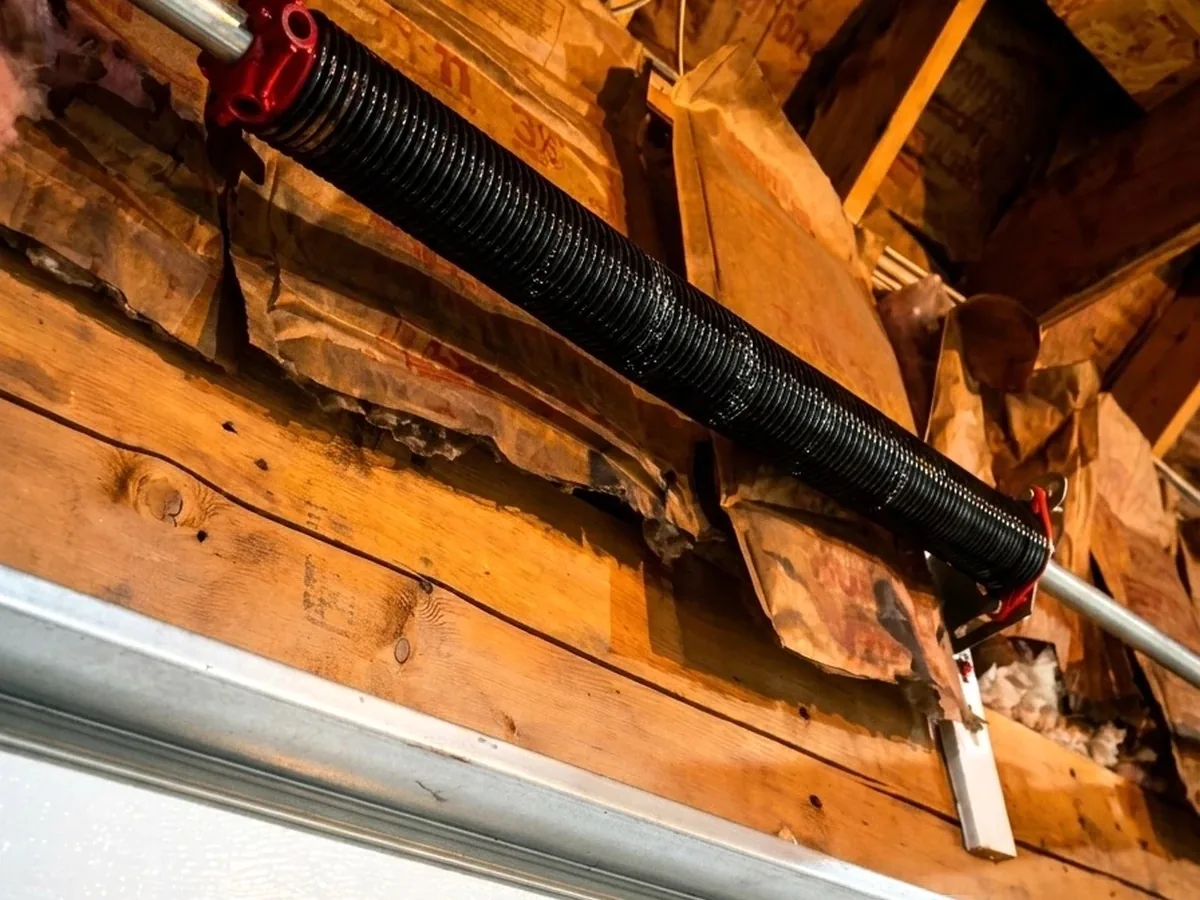
Signs your garage door spring needs repair
Most homeowners learn a spring broke from the noise. A torsion spring under tension can snap with a sound like a firecracker, often while nobody is near the door. The next time someone presses the opener, the motor strains and the door barely moves.
Look above the door. A torsion spring that has broken shows a clear gap between two coils. Extension springs, the long ones that run beside the horizontal tracks, may hang loose or stretch out of shape.
Other signs come on slowly. A door that drifts down on its own, sits crooked or needs more effort every month is often a door whose springs are losing tension.
Why the opener is not the problem
An opener is built to guide a balanced door, not to lift its full weight. If the springs are gone, the motor may hum, click or reverse. Forcing it over and over can strip gears and damage the trolley.
What makes garage door springs fail
Every spring is rated for a set number of cycles. One cycle is one trip up and one trip down. A busy household can use a standard spring's life in a handful of years, especially when the garage is the main entrance.
Massachusetts weather adds stress. Cold mornings make steel less forgiving, and damp garages invite rust that grinds between the coils. A spring that is too small for the door also wears out early, because it works harder on every lift.
How spring repair works
A technician first releases the door safely and checks the balance of the whole system. Springs are matched to the door's weight, height and track radius, so the right replacement depends on measurements, not guesswork.
Torsion springs mount on a shaft above the door and are wound with steel winding bars. Extension springs stretch along the tracks and should run with a safety cable through the middle. Once the new springs are in, the door is balanced, tested by hand and then run with the opener.
Torsion or extension springs
Many newer doors use torsion springs because they lift smoothly and stay contained on the shaft. Older and lighter doors often use extension springs. Converting from one type to the other is possible on some doors and is worth asking about during a visit.
Spring options and parts
Standard springs fit most homes. Higher-cycle springs use heavier wire and last longer for doors that open many times a day. On a two-spring door, both springs should match so the door lifts evenly.
Cables, drums and bearings work alongside the springs. When those parts are worn, it often makes sense to look at them during the same visit rather than wait for the next failure.
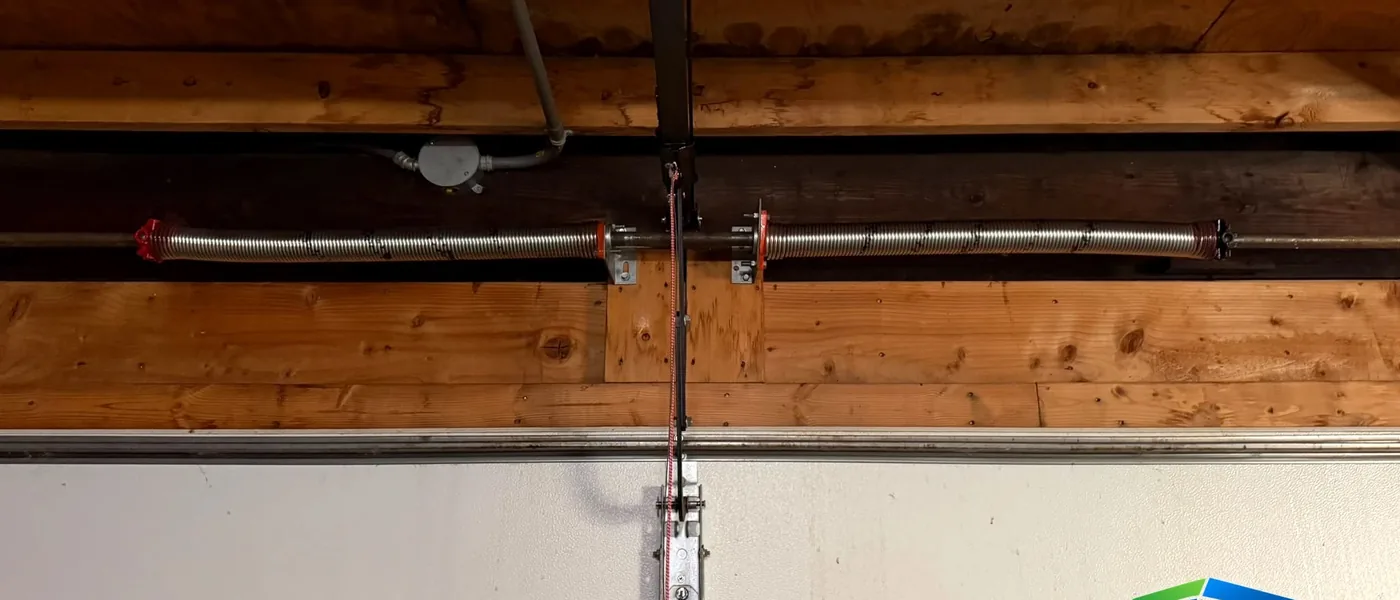
Why spring repair is not a DIY job
A wound torsion spring stores enough energy to break bones. Winding bars can slip, set screws can let go, and a door can drop without warning. Please do not loosen, adjust or unwind a spring yourself, and keep children and pets clear of a door with a broken spring.
Leave the door where it is and call. Johnny Garage Door Service is open 24/7 and backs its work with a 90-day parts and labor warranty.
What to expect from your garage door spring repair
Expect the technician to explain which spring failed, what size the door needs and whether any nearby parts look worn. You should see the door balanced and tested before the visit ends. If something else needs attention, you will hear about it plainly so you can decide.
Keeping new springs healthy
A little care stretches spring life. A light coat of garage door lubricant on the coils a couple of times a year cuts friction and slows rust. Wipe off the extra so it does not drip.
Watch the door's balance as the seasons change. If it starts to feel heavier or drifts after you stop it halfway, have it checked before the spring lets go.
Garage Door Spring Repair questions
Should I replace a broken garage door spring myself?
No. Springs hold extreme tension and can cause serious injury when they are handled without the right tools and training. Keep clear of the door and call a professional.
Should both springs be replaced at the same time?
On a two-spring door, replacing both is usually wise. Springs installed together wear at about the same rate, so the second one is often close to failing as well. Matching springs also keep the door balanced.
Can I open the door with a broken spring?
It is best not to. The door is far heavier than normal and can fall, and the opener can be damaged trying to lift it. If a car is trapped inside, call for help instead of forcing the door.
How long do garage door springs last?
It depends on the spring's cycle rating and how often the door runs. A door used several times a day reaches the end of a standard spring sooner. Higher-cycle springs are an option for busy garages.