Garage door won't close? What to do first: check the sensors
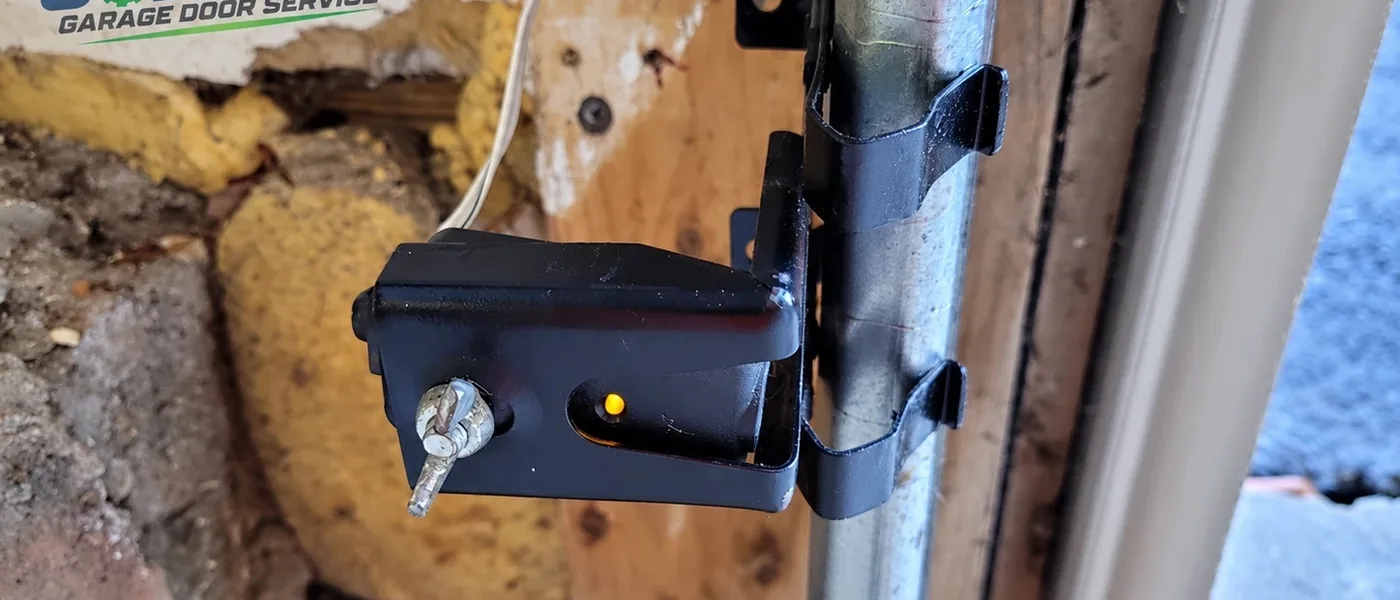
Most doors that refuse to close have a sensor problem. Modern openers use a pair of photo-eye sensors mounted a few inches above the floor on each side of the door. They send an invisible beam across the opening. If the beam is broken, the door will not close, or it will reverse.
Look at both sensors. Many have small lights. A steady light usually means they see each other. A blinking light or no light often means a problem.
- Remove anything in the doorway, like a bin, box or leaves
- Wipe the lenses with a soft dry cloth
- Check that neither sensor has been bumped out of line
- Look for a loose or damaged wire running to either sensor
Many homeowners find the fix within a few minutes. A sensor knocked by a broom, a box left in the doorway or a remote in lock mode accounts for a large share of doors that will not close. The checks that follow move from the most common causes to the least common, so start at the top and work down.
Sunlight can confuse the sensors
If your door only refuses to close at a certain time of day, the sun may be the cause. Strong direct sunlight shining into the receiving sensor can drown out its beam.
This tends to happen at sunrise or sunset when the sun sits low and lines up with the garage. A small shade over the sensor, or swapping which side the sending and receiving sensors sit on, often solves it. Your opener manual will show which sensor is which.
Sensors can also be knocked out of line by a car bumper, a bike or a kid's toy. Even a small tilt can stop them from seeing each other. If one sensor's light is off or blinking, gently loosen its wing nut, aim it at the other sensor until the light turns steady, and tighten it again.
Check lock mode, power and the release
Lock mode. Many wall controls have a lock or vacation button. When it is on, remotes stop working, though the wall button may still run the door. If your remote suddenly does nothing, check the wall control for a lock light.
Power. Make sure the opener is plugged in and the outlet has power. A tripped breaker or GFCI outlet is a common culprit.
The emergency release. If the red cord was pulled, the door is disconnected from the opener. The motor may run while the door stays put. Only reconnect it if the door is fully closed or you are sure the springs and cables are intact.
You can also try closing with the wall button held down. On many openers, holding the button overrides the sensors so you can close the door in a pinch. Watch the door the whole way down.
When to stop using the door
Some causes are not safe to work around. Stop using the door and keep everyone clear if you notice any of these.
- A gap in a torsion spring or a loud bang from the garage
- A cable that is loose, frayed or hanging
- A bent track or a roller out of its channel
- A door that hangs crooked or looks twisted
- A door that slams down or feels very heavy
These parts are under heavy tension. Do not try to adjust, loosen or remove them yourself, and do not force the door closed with the opener.
Other causes that stop a door from closing
If the sensors, power and lock mode all check out, a few other things can keep a door from going down.
Limit settings. Openers have settings that tell the motor where to stop. If they drift, the door may stop short or reverse as soon as it touches the floor.
Force settings. A door that is stiff or partly binding can make the opener think it hit something. It reverses for safety.
Remote problems. A dead remote battery is easy to rule out. If the wall button works but the remote does not, start there.
Something in the track. A roller hitting debris, ice or a bent spot can stop the door in its path.
Limit and force adjustments are covered in most opener manuals. Change them in small steps and test the auto-reverse afterward, because the wrong force setting can stop the door from reversing when it should.
If the door closes partway and then goes back up, look closely at what happened. Reversing at the floor often points to limit settings. Reversing midway often points to the sensors, a binding track or a door that is out of balance.
Getting help when the door is stuck open
A garage door that will not close leaves your home open to weather and to anyone walking by. That is often the moment people need help outside normal hours.
Johnny Garage Door Service offers emergency garage door repair 24/7, every day of the year. Our repairs come with a 90-day parts and labor warranty. If the simple checks above did not fix it, or you found a broken part, call us and keep clear of the door until it is repaired.